

The Story of Specialty Coffee: From the Farm to Your Cup
The Story of Specialty Coffee: From the Farm to Your Cup
Take the first sip while the cup is still too hot to hold comfortably. It tastes of roast and warmth, a little bitter, a little sweet. Now leave it on the counter for ten minutes and come back. The same coffee has changed: it is sweeter, brighter, and there is a note of something like stone fruit or black tea that simply was not there before.
The coffee you grew up with does not do that. It tastes the same at the first sip and the last, the same this year as last year. That is not a flaw. It is exactly what it was built to do.
So how did coffee become something people pay this kind of attention to, something that changes in the cup and changes from one harvest to the next? The story of specialty coffee is younger than most people think. It starts with one woman in San Francisco, a word she chose, and an idea that a whole industry eventually organised itself around.
When Coffee Was Just Coffee
For most of the twentieth century, coffee was a pantry staple, like flour or sugar. Large roasters bought green coffee in enormous volumes from many countries and blended it so that every tin tasted the same, year after year. Customers did not ask which country it came from, and nobody expected them to. People who study the industry now call this the “first wave”: coffee chosen for a fair price and a dependable taste.
It is worth telling this part kindly, because it was a real achievement. Coffee is a farm crop. Rain, heat and disease change it every season, and the blenders who smoothed all that variation into one steady flavour were skilled people solving a hard problem. Most of the coffee the world drinks today is still made this way, and the difference between that approach and specialty coffee is its own subject, covered in our guide to specialty vs commercial coffee.
What that system could not do was tell you where your coffee came from. Every bean was a component, and a component is chosen because it disappears into the whole. The idea that a single place might be worth tasting on its own needed someone to say it out loud.
A Buyer, a Word, and a New Idea
Erna Knutsen was born in Norway and came to the United States as a child. She started in coffee as a secretary at B.C. Ireland, a green coffee importer in San Francisco, at a time when the people who tasted and bought the coffee were all men. When she asked to join them at the cupping table, the bench where professionals taste rows of coffee side by side, she was turned away.
So she found her own way in. Working for one of the firm’s partners, Bert Fulmer, she became fascinated by an Indonesian coffee, a Mandheling from Sumatra, that tasted far better than the bulk lots the trade usually handled. She persuaded the company to let her buy it and began selling smaller quantities than a full shipping container to small regional roasters, the kind of businesses the big importers rarely bothered with. It turned out there were plenty of them, and they wanted exactly what she had.
In a 1974 issue of the Tea & Coffee Trade Journal, Knutsen used the phrase “specialty coffee” for what she was doing. Her idea was simple and, at the time, quietly radical: coffee grown in particular microclimates, the specific conditions of one valley or one hillside, has a flavour of its own, and that flavour is worth keeping separate rather than blending away. The history of specialty coffee more or less begins with that sentence.
She stayed in the trade for the rest of her life. She later bought the importing business and renamed it Knutsen Coffees, and in a speech in 2014 she remembered the men who had kept her from the cupping table with a famous line: “I bought the company and I fired them all.” She died in 2018 at the age of 97, long after the word she chose had become the name of an industry.
The Movement Finds Its People
An idea needs people to gather around it. In 1982, a group of American roasters, importers and retailers founded the Specialty Coffee Association of America, the SCAA, to give this small, scattered trade a shared voice, shared standards and somewhere to meet. A European counterpart followed in 1998.
The next turning point happened at origin, not in a roastery. In 1999, during a project in Brazil backed by the International Coffee Organization, organisers noticed that Brazilian farmers were producing excellent coffee but selling it at the same low commodity price as everything else. Their answer was a competition, first held in Brazil that year and soon known as Cup of Excellence. Expert juries tasted coffees blind, the best lots were named, and the winners were sold by online auction. For the first time, a farmer whose coffee tasted extraordinary could be paid for it, by name, in front of buyers from around the world.
Around the same time the movement got a name for itself. Coffee professional Trish Rothgeb, writing in the newsletter of the Roasters Guild, described a “third wave” of coffee: after the first wave of dependable tins and a second wave of coffeehouses and espresso drinks, a third that treated coffee more like wine, with the country, farm and process printed on the bag. Rothgeb is the person usually credited with the term, although sources disagree on whether her article appeared in 2002 or 2003, and a trade writer named Timothy Castle had used the phrase “third wave” a few years earlier.
In 2017 the American and European associations completed a merger into today’s Specialty Coffee Association, the SCA. By then the farmers, buyers, roasters and baristas behind the movement were spread across every coffee growing and coffee drinking country in the world, and the SCA sets many of the standards they still work to.
Following One Bag From Farm to Cup
History explains where specialty coffee came from. To understand what it actually is, it helps to follow a single bag. The lot below is an illustration, not a real named farm, but every step it passes through is real.
The farm: where flavour is decided
Picture a small farm on a steep slope high in the mountains of Central America. The altitude matters: cooler nights slow the ripening of the coffee cherry, the small red fruit that holds two seeds we call beans. Slower ripening tends to give a denser bean and more complex acidity, the bright, lively quality tasters describe with words like citrus or berry. Volcanic soil, the amount of rain, the shade from nearby trees and the variety of coffee plant all add their own share.
Together, this set of conditions is what coffee people call terroir, a word borrowed from wine that simply means the taste of a place. It is the reason two farms a few kilometres apart can produce coffees that taste noticeably different, and it is exactly what Erna Knutsen meant when she spoke about microclimates.
Picking and processing: the first choices
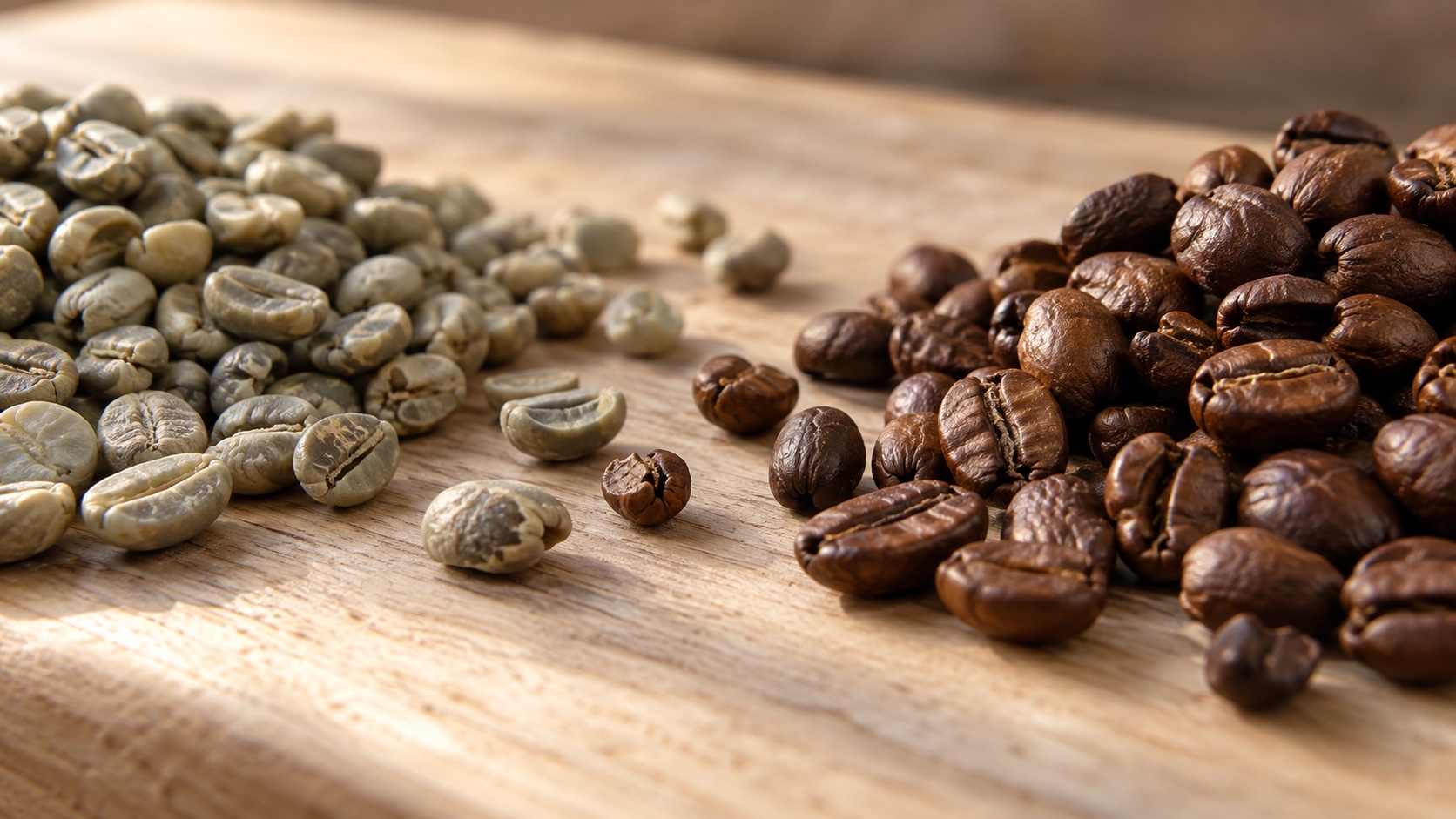
At harvest, the best farms pick only ripe cherries, often by hand, going over the same trees several times as the fruit matures. Then the farmer has to get the seed out of the fruit and dry it, and the way that is done, the process, shapes the cup as much as almost anything else.
- Washed: the fruit is removed and the beans are fermented and washed clean before drying. The cup tends to be clean, clear and bright, so the character of the farm comes through plainly.
- Natural: the whole cherry is dried in the sun with the bean still inside, like a raisin. The cup tends to be fruity, heavy and sweet, sometimes with a winey edge.
- Honey: the skin is removed but some of the sticky fruit layer is left on the bean while it dries. The result usually sits between washed and natural.
- Newer fermentation styles: some producers now ferment cherries in sealed tanks or with controlled cultures, which can produce intense, unusual flavours.
On our illustrative farm, the lot is washed, then laid out on drying beds. For days the farm smells faintly of fruit and wet earth while the beans are raked and turned until they are dry enough to rest and travel.
The cupping table: earning the name
Before anyone buys the lot, it is tasted. Samples are roasted lightly, ground into bowls, covered with hot water and tasted with a spoon in a ritual called cupping. Tasters slurp loudly to spray the coffee across the palate, and they come back to the same bowls again and again as the coffee cools, because a good coffee reveals more as it cools and a flawed one reveals its flaws.
Each coffee is scored. On the SCA’s traditional 100-point cupping form, a coffee that scores 80 points or more, with no serious defects, counts as specialty coffee. Everything below that line is commercial grade. In 2024 the SCA adopted a newer system, the Coffee Value Assessment, which describes a coffee in more detail rather than reducing it to a single number, but 80 points remains the shorthand most of the trade still uses for what counts as specialty.
Our lot scores well. It is bought by a roaster who will keep it separate, sell it under the farm’s own name, and print that name on the bag.
The roaster: roasting it for what it is
A commercial roaster’s job is to make this year’s blend taste like last year’s. A specialty roaster has the opposite task: to roast each lot so that it tastes most like itself. That usually means a lighter touch, stopping before the flavours of the roast cover the flavours the farm worked to grow.
The roaster cups the lot again, adjusts, and settles on a profile. The darker the roast, the more it tastes of roasting itself: chocolate, caramel and smoke. The lighter, the more of the origin comes through. Our guide to how roast level shapes your cup covers that trade off in detail.
The brewer at home: the last few minutes
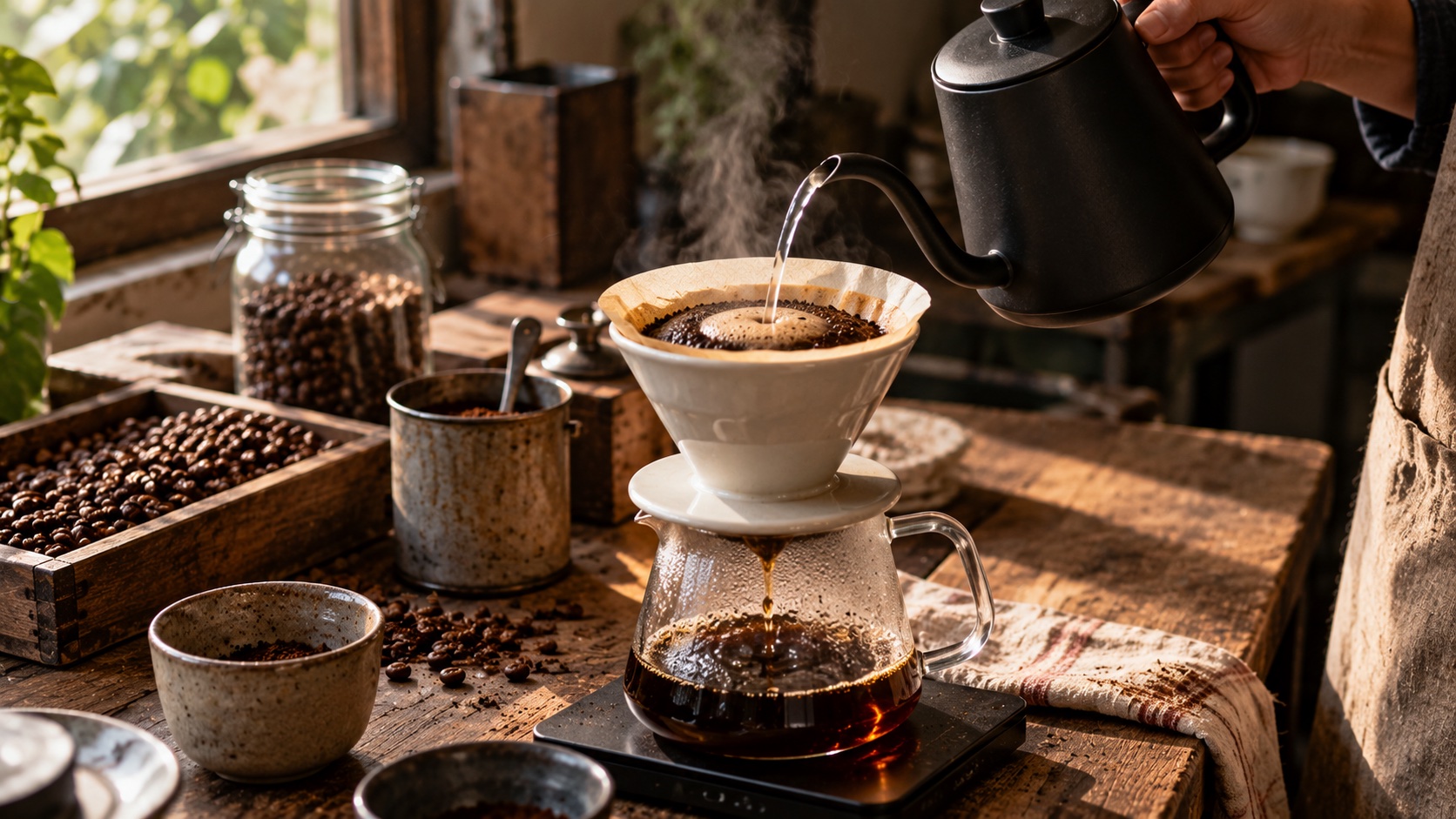
After all those months and all those hands, the final step belongs to you. Grind size, water temperature, the ratio of coffee to water and the time they spend together decide how much of the farm’s work actually reaches the cup. Grind too fine and the coffee can taste harsh and bitter. Grind too coarse and it can taste thin and sour.
This is why specialty coffee drinkers care about the details of brewing. It is not fussiness for its own sake. It is the last few minutes of a chain that began on a mountainside, and they can either carry that work into the cup or waste it.
Why Specialty Coffee Never Tastes the Same Twice
Go back to the cup on the counter, the one that changed as it cooled. Now you know what was happening. As the temperature drops, your palate picks up sweetness and acidity that heat had masked, and a coffee grown, processed and roasted to keep its character has more character to reveal.
The same thing happens across the seasons. Next year our illustrative farm will have more rain or less, a warmer spell at flowering or a cooler one at harvest, and its coffee will taste a little different. A commercial blender would correct for that. Specialty coffee does the opposite: it treats the difference as the point. Each harvest is a snapshot of one place in one year, and when it is gone, it is gone.
That is the whole idea of terroir, and it is the thread running through the story of specialty coffee, from Erna Knutsen’s microclimates to a farmer winning an auction under their own name. It also explains why a bag of specialty coffee carries so much information. If you want to go further into the beans themselves, our explainer on Arabica, Robusta and other specialty coffee beans is a good next read, and our earlier guide to what specialty coffee is covers the basics in a few minutes. The Specialty coffee entry on Wikipedia is a useful starting point for the wider history.
Read the Bag, Then Taste the Cup
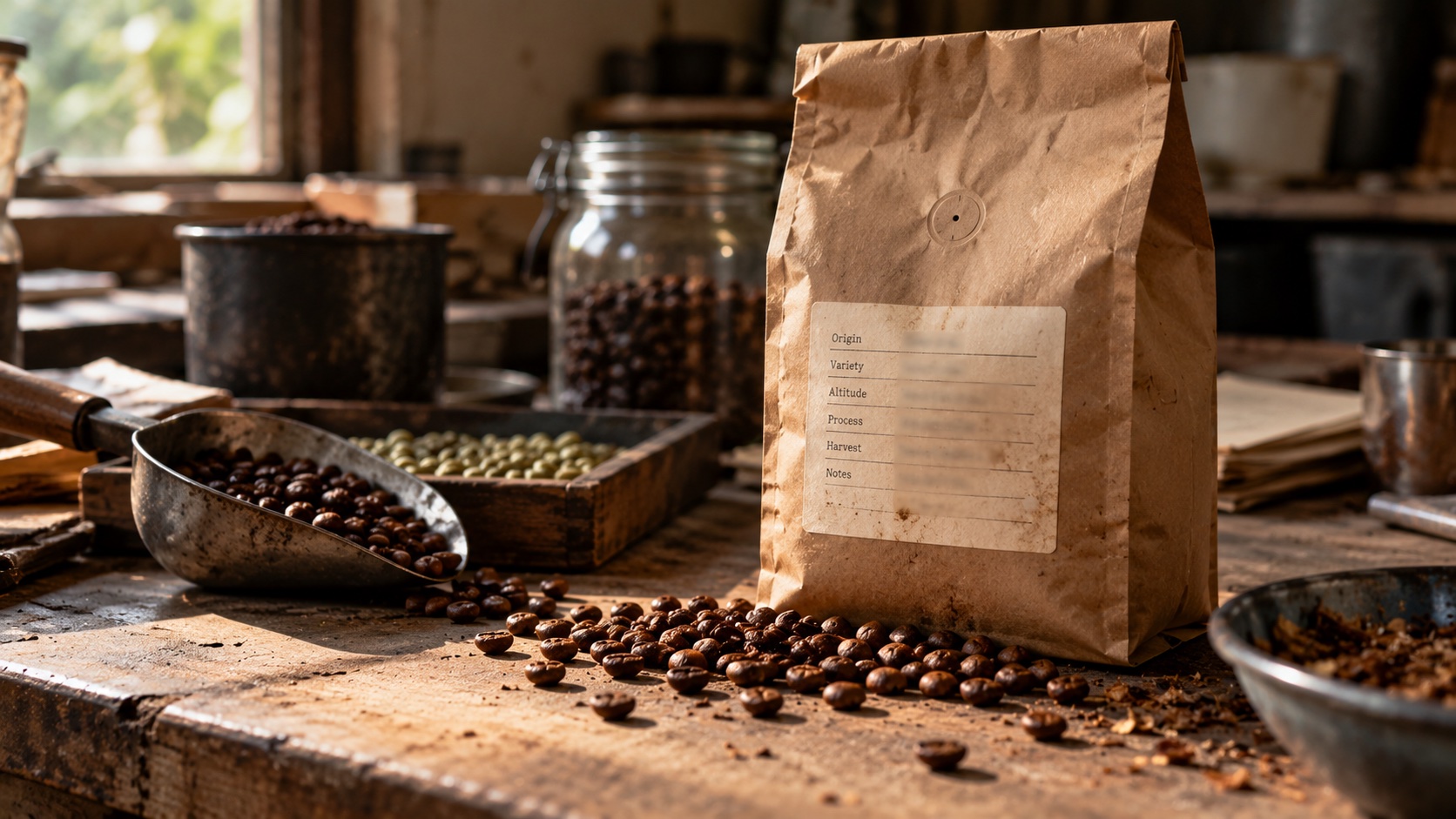
Next time you open a bag of coffee, read it before you brew. Look for the country and the region, the farm or the cooperative if it is named, the altitude, the process and the roast date. Every line on that label is a chapter of the story above, and each one hints at what you are about to taste.
Then brew it with a little care. If you want a simple method to start with, our guide to brewing hand brew coffee at home walks through it step by step. Take the first sip hot, and then let the cup sit. Come back in ten minutes and taste it again. The difference you notice is the farm, the process and the roaster all speaking at once, and it is the reason specialty coffee exists at all.
Note: Brewing involves hot water and, for some methods, pressure or electrical appliances — always follow the manufacturer’s instructions.
No Comments