

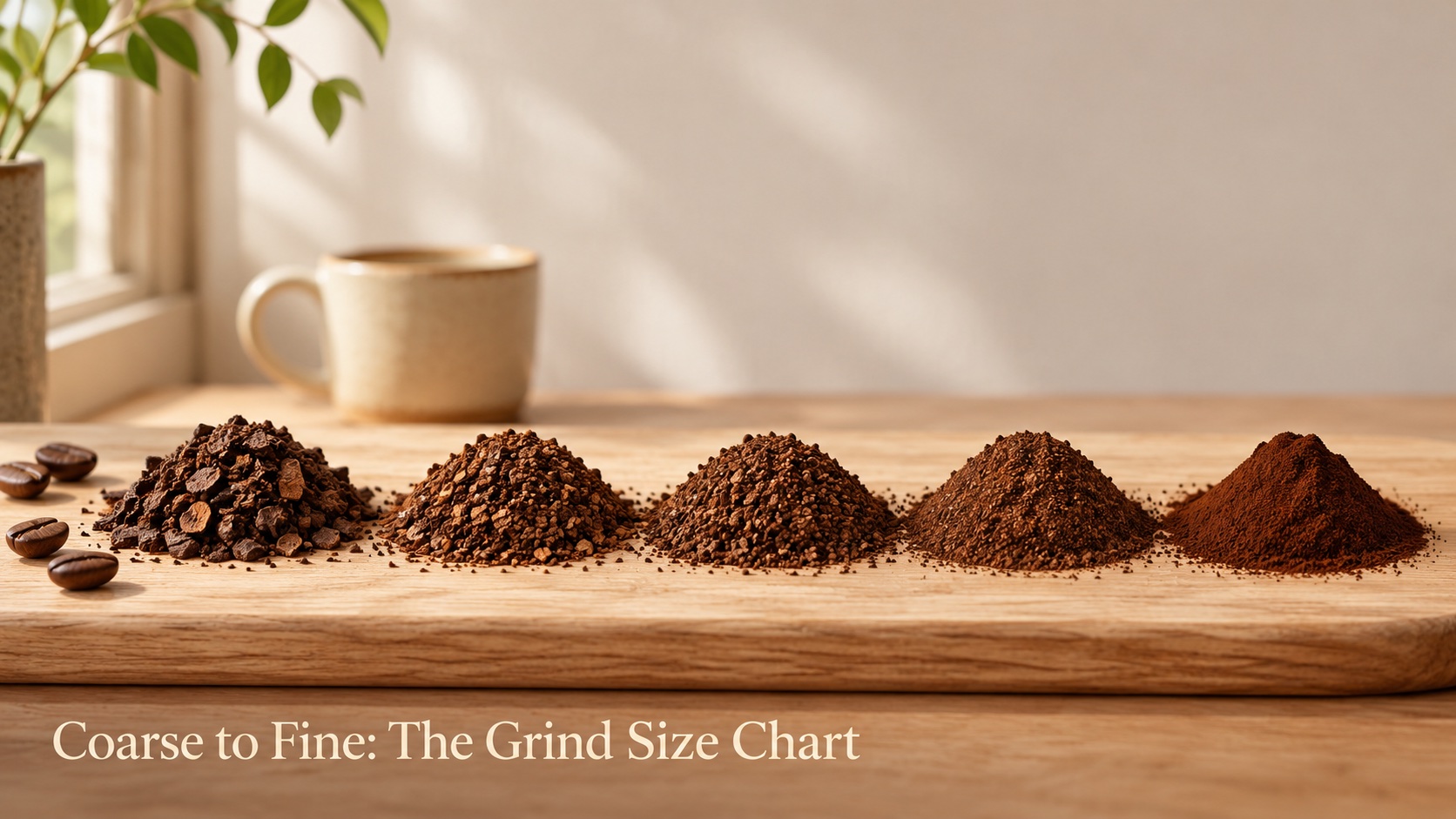
Coffee Grind Size Chart: Match Every Brewer, Coarse to Fine
1. Why Grind Size Decides the Cup
Grind size is the one brewing variable that quietly controls the others. It sets how much surface the water can reach, how fast the water gets through the bed, and how long the coffee and water stay in contact. Get it wrong for your brewer and no amount of careful pouring will save the cup.
The rule underneath every coffee grind size chart is simple. The less time water spends with the coffee, the finer you grind; the longer the contact, the coarser. Espresso finishes in under a minute, so it needs the finest grind. Cold brew steeps for most of a day, so it needs the coarsest.
Too fine for the method and the cup over-extracts: water pulls out too much, and the coffee tastes bitter, dry and harsh. Too coarse and it under-extracts: the cup tastes sour, thin and hollow. Extraction simply means the share of the coffee that dissolves into your drink, and grind size is your main handle on it.
One honest warning before the chart. Every grind chart, including this one, describes grounds with kitchen comparisons like sea salt and sugar, and those comparisons are approximate. Different charts even disagree on where a method sits. Treat what follows as a starting point, then let the taste of the cup move you a step finer or coarser.
2. The Coffee Grind Size Chart at a Glance
Guidance checked 5 November 2026 against AeroPress’s official grind guide, Bodum’s French press manual and published brewing references. Grind descriptions are starting points, not fixed settings.
| Brewer | Grind size | Looks roughly like | Contact time |
|---|---|---|---|
| Cold brew | Coarse to extra coarse | Coarse sea salt or rock salt | 12 to 24 hours |
| French press | Coarse | Coarse sea salt | About 4 minutes |
| Chemex | Medium coarse | Coarse sand | Several minutes |
| Siphon (vacuum pot) | Medium to coarse | Sand to coarse sand | Around 2 minutes in the top chamber |
| Drip coffee maker | Medium | Beach sand | Set by the machine |
| Pour-over (V60 style cone) | Medium fine to medium | Between table salt and sand | A few minutes |
| AeroPress | Medium fine | Table salt | Short, usually a few minutes or less |
| Moka pot | Fine, a step coarser than espresso | Fine table salt | A few minutes on the stove |
| Espresso | Fine | Finer than table salt | About 25 to 30 seconds |
If you only remember one row, remember the moka pot. It is the method most often given the wrong grind, and section 7 explains why.
3. Coarse: French Press and Cold Brew
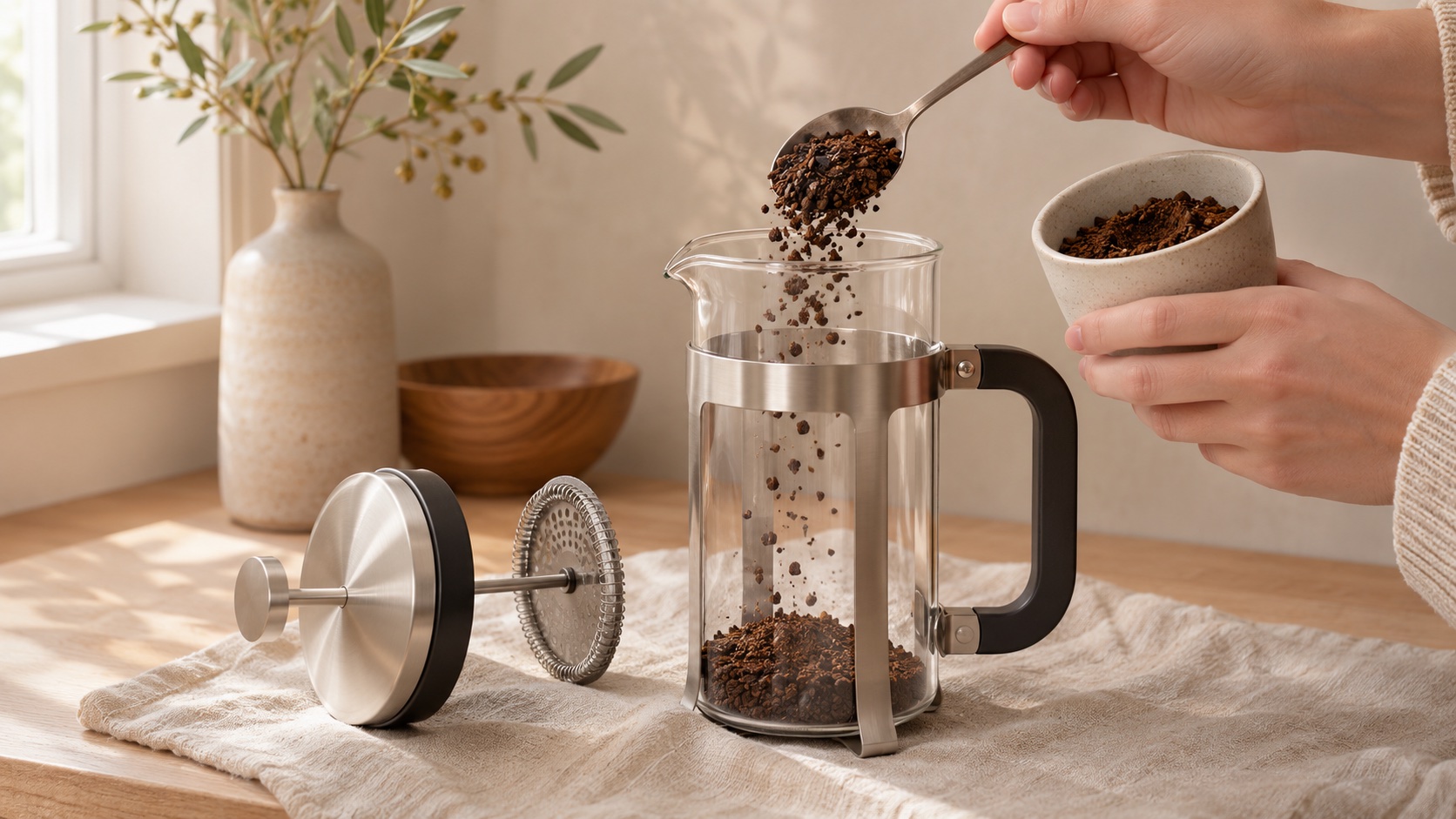
A coarse grind looks like coarse sea salt: distinct, chunky particles you can see individually. It suits methods where the coffee sits fully immersed in water for a long time and a mesh or cloth does the filtering.
French press. Bodum’s own French press manual tells you to use only coarse ground coffee, and gives the reason plainly: a fine grind can clog the filter and create high pressure when you plunge. That is a safety point as well as a flavour one, because forcing a plunger through a clogged mesh can push hot coffee out of the spout. Bodum’s method is a four minute steep, then a slow, steady press.
- Coarse particles release flavour slowly, which suits a four minute immersion
- Larger grounds stay behind the metal mesh instead of passing into your cup
- Too fine here gives a muddy, bitter cup and a plunger that fights back
Cold brew. Cold water extracts far more slowly than hot water, so cold brew steeps for roughly 12 to 24 hours. Over that long a contact time, even a medium grind over-extracts and turns the concentrate bitter and astringent. Go coarse, or extra coarse if your grinder offers it, and strain through paper at the end if the result looks cloudy.
4. Medium Coarse: Chemex
Medium coarse sits one step finer than French press, closer to coarse sand. AeroPress’s own grind scale places the Chemex here, between French press and drip.
The reason is the filter. Chemex filters are noticeably thicker than ordinary paper cones, so water drains through them more slowly. A finer grind on top of that slow paper stalls the brew and over-extracts it. A medium coarse grind keeps the flow moving so the brew finishes in a sensible time and the cup stays clean and bright.
If your Chemex brew takes far longer than you expect and tastes bitter, go coarser before you change anything else.
5. Medium: Drip Machines and the Siphon
A medium grind has the feel of ordinary beach sand. It is the default for most automatic drip coffee makers, which control their own water flow and contact time and simply need a grind that drains at a steady rate through a flat bottomed basket.
The brief we started from placed the siphon here too, and that is a reasonable starting point, but published siphon recipes vary more than the charts admit. Hario’s own recipes page carries a Blue Bottle siphon recipe that uses 23 g of coarsely ground coffee to 350 ml of water, with a brew time of about two minutes. Others go finer. Start at medium, and move coarser if the cup turns bitter or the coffee is slow to draw back down.
- Medium works for drip machines because the machine, not you, sets the timing
- Siphon brewing can sit anywhere from medium to coarse depending on the recipe
- If your drip machine’s coffee tastes flat and sour, go one step finer
6. Medium Fine: Pour-Over and AeroPress
Medium fine sits between fine sugar and table salt. This is where hand pour-over and the AeroPress usually live, and it is the band where small changes show most clearly in the cup.
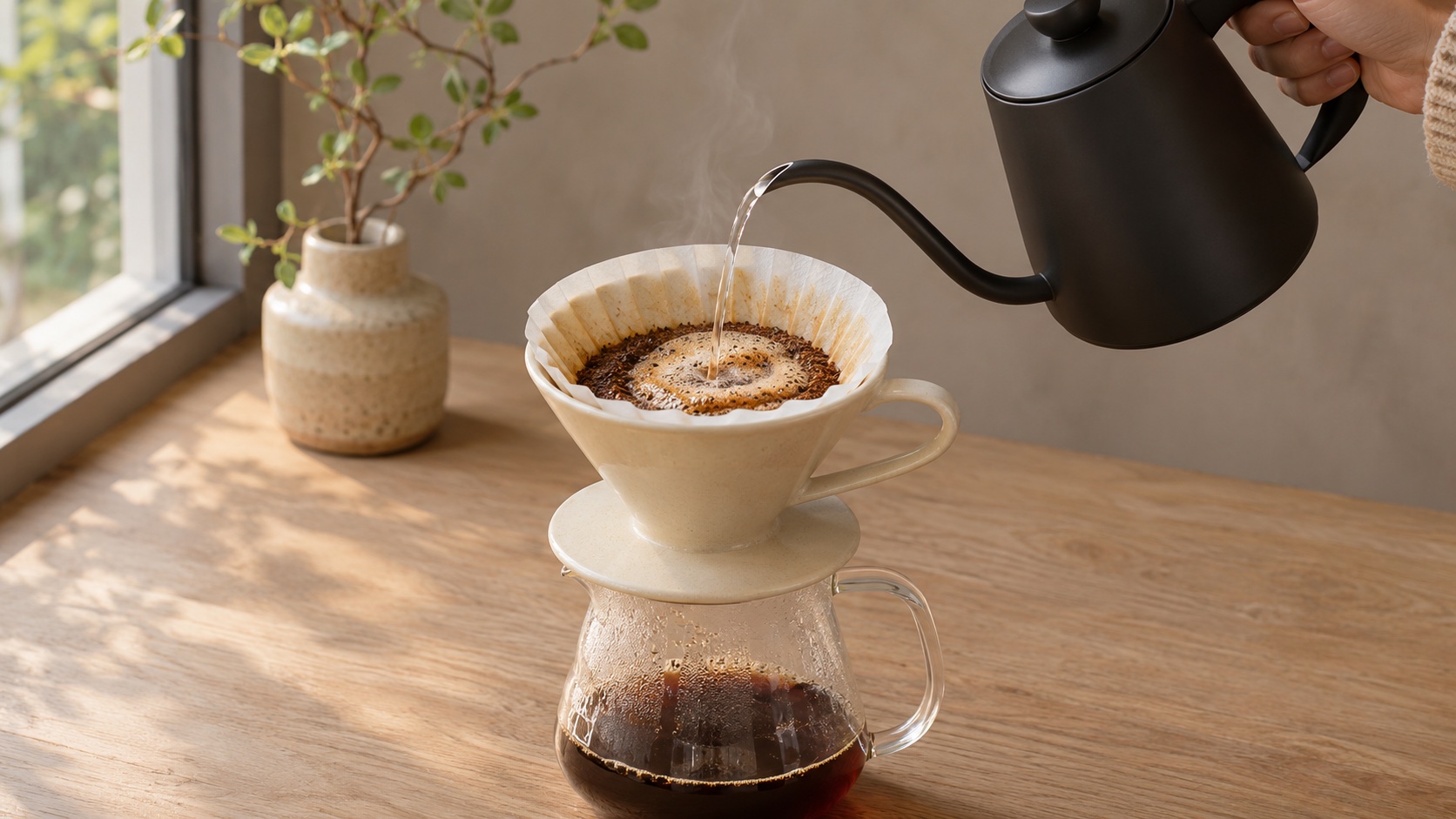
Pour-over. Cone drippers such as the V60 style have a large single hole and thin paper, so water passes quickly. A medium fine to medium grind adds enough resistance for the water to spend a useful few minutes in the bed. Your draw down time, the moment the water finishes dripping through, is the most useful feedback you have: a brew that rushes through usually needs a finer grind, one that stalls needs a coarser one.
AeroPress. The brief we worked from listed the AeroPress under both medium and medium fine. AeroPress’s own guidance settles it: use a medium fine grind, “finer than drip coffee but coarser than espresso.” Its official page even gives hand grinder starting points, for example 14 to 20 clicks from zero on a TIMEMORE C2 or C3.
7. Fine: Espresso, and Why the Moka Pot Is Different
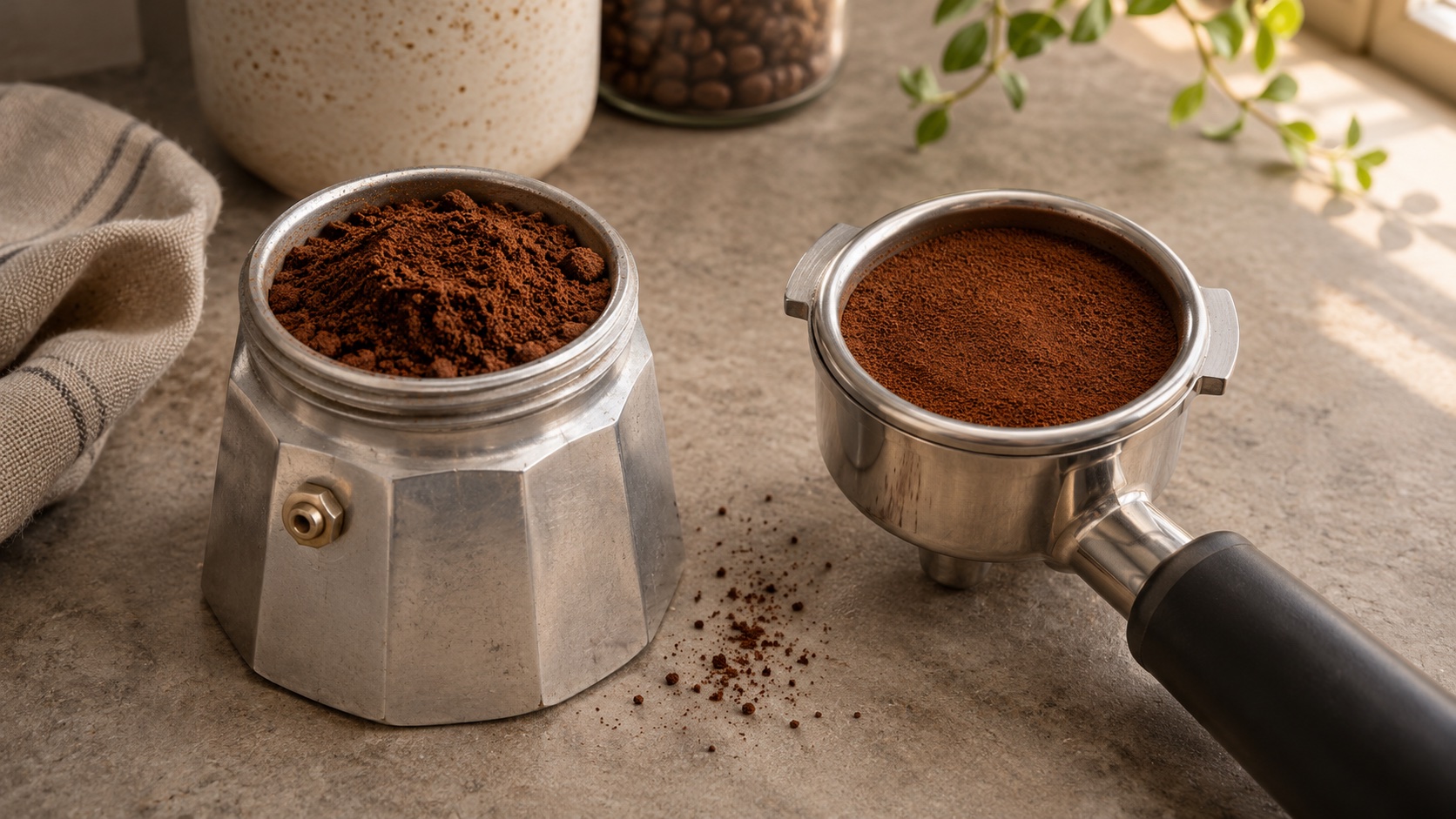
A fine grind is finer than table salt, and for espresso it gets close to the softness of powdered sugar between your fingers.
Espresso. An espresso machine pushes water through a tightly packed puck of coffee at around 9 bar of pressure. Only a fine grind gives enough resistance for that pressure to build. A typical shot runs about 25 to 30 seconds; much faster usually means the grind is too coarse, much slower means it is too fine. Espresso is also the method least forgiving of an uneven grind, which is why a grinder that genuinely reaches espresso fineness costs more than one built for filter.
Moka pot. Many charts, including the one our brief was based on, put the moka pot at the same fine setting as espresso. That is the common mistake. A moka pot makes strong, concentrated coffee, but it is not espresso: it works at much lower pressure, driven by steam in the lower chamber. True espresso fineness restricts the flow, and the coffee comes out bitter and over-extracted. Brewing guides broadly agree on a fine to medium fine grind, a step or two coarser than your espresso setting. If your moka coffee is bitter, grind slightly coarser and take the pot off the heat as soon as the stream turns golden.
8. Why Consistency Matters as Much as Size
A grind setting describes an average, but what reaches the brewer is a spread of particle sizes. The narrower that spread, the more evenly the coffee extracts.
A blade grinder chops beans with a spinning blade, so the result runs from fine dust (called fines) to large chunks (called boulders). The fines over-extract and add bitterness while the boulders under-extract and add sourness, and you end up with a cup that manages to be both bitter and sour. Grinding for longer only makes more dust without removing the chunks.
A burr grinder crushes beans between two burrs set at a fixed gap, so the particles come out far closer in size. No grinder produces perfectly uniform grounds, but the difference between a blade and even a modest burr grinder is easy to taste.
- A blade grinder is just about tolerable for French press, where the coarse target hides some unevenness
- It is a poor fit for pour-over and unworkable for espresso
- Pre-ground coffee is fixed at one size and loses aroma quickly once opened
9. How to Dial In From the Chart
A chart gets you close. These steps get you the rest of the way, one change at a time.
- Set your grinder to the starting point for your brewer from the table above.
- Keep your dose, water amount and water temperature the same for every test. For hot methods, water around 93 °C, just off the boil, is the widely used reference point.
- Brew and taste. Note the total brew time.
- Sour, thin or hollow: go one step finer.
- Bitter, dry or harsh: go one step coarser.
- Change only the grind between brews, so you know what caused the difference.
As a reference ratio, the Specialty Coffee Association’s brewing guidance works from about 55 g of coffee per litre of water for filter coffee. Fix your ratio first, then use grind size to tune the taste.
10. Who This Chart Is Not For
Not everyone needs to think about grind at all, and it is worth saying so.
- Capsule and pod users have no grind choice to make; the capsule sets it
- Bean to cup machine owners can usually adjust grind, but only within the machine’s own range, so follow its manual rather than a general chart
- Pre-ground buyers without a grinder can still use this as a guide to which bag to buy, labelled for filter, espresso or cafetière, but cannot fine tune it
11. Our Recommendation: Buy the Grinder Before the Brewer
If you brew filter coffee at home and still use a blade grinder or pre-ground coffee, the best money you can spend is a burr grinder, ahead of any new dripper or kettle. It is the only way to actually move along the chart above.
For filter on a budget, a hand grinder is the sensible start: TIMEMORE’s Chestnut C5 series was listed from US$110 on timemore.com when we checked on 5 November 2026. If you would rather not crank by hand, or you also want espresso, the Baratza Encore ESP electric burr grinder was listed at US$199.95 at US specialty retailers on the same date. Our KINGrinder K7 review covers a filter focused hand grinder in more depth.
For the method itself, our guide to brewing hand brew coffee at home puts the medium fine setting to work.
FAQ
What grind size is best for French press?
Coarse, similar to coarse sea salt. Bodum’s own manual says to use only coarse ground coffee, because a fine grind can clog the mesh filter and create pressure when you plunge. Steep for about four minutes, then press slowly.
Is moka pot grind the same as espresso?
No. A moka pot needs a fine to medium fine grind, a step or two coarser than espresso. True espresso fineness restricts the flow in a moka pot and tends to make the coffee bitter.
What grind size does AeroPress recommend?
Medium fine. AeroPress’s official guidance describes it as finer than drip coffee but coarser than espresso, and suggests starting points for popular hand grinders.
Why does my coffee taste sour or bitter?
Sour and thin usually means under-extraction, so grind finer. Bitter and harsh usually means over-extraction, so grind coarser. Change one step at a time and keep everything else the same.
Do I need a burr grinder?
For anything finer than French press, yes, it makes a clear difference. A blade grinder produces a mix of dust and chunks that extract unevenly, while a burr grinder produces much more consistent grounds.
What grind size should I use for cold brew?
Coarse to extra coarse. Cold brew steeps for roughly 12 to 24 hours, and a finer grind over-extracts in that time and turns the concentrate bitter.
Disclosure
Note: Brewing involves hot water and, for some methods, pressure or electrical appliances — always follow the manufacturer’s instructions.
No Comments